
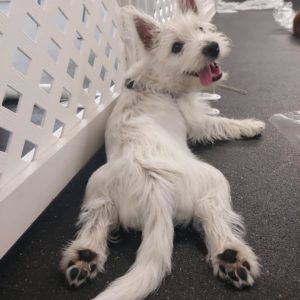
Welcoming a new dog into your home is such an exciting time. But it’s also a big adjustment for both of you. Your new pup is transitioning from an unfamiliar environment into a brand-new world. With a little patience, consistency, and love, you can help them feel safe and secure. Here’s how to get started:
🕒 Let Your Pup Settle In: The 3-3-3 Rule
This simple guideline helps you know what to expect as your dog adjusts to life in your home:
- 3 Days to decompress
- 3 Weeks to learn their routine
- 3 Months to feel fully secure and at home
Young pups coming from a responsible breeder under favorable conditions will adjust much faster than this. But older pups and adult dogs coming from a shelter or rescue this is a HUGE change. Your dog might seem nervous, withdrawn, or confused at first. Some dogs may even emotionally shut down while they try to make sense of their new surroundings.
Tip: For the first few days, keep things calm and predictable. Stick to short walks, limit visitors, and keep other pets separated. Let Aunt Edna know your new buddy needs a little time before meeting the whole extended family!
🐶 Slow and Steady Introductions
Once your pup has had a few days to relax, slowly expand their social circle over the next few weeks. Introduce new people and other animals carefully. No dog parks just yet! Also, trouble with resident pets is one of the top reasons adoptions don’t work out.
Tip: Plan pet introductions thoughtfully and don’t rush it. Let the dogs get used to each others presence, with some distance between them, prior to allowing direct interaction. Use treats, praise, and positive experiences to build trust between animals. If things feel rocky, reach out to a professional trainer.
🏋️ Start Training Early
After about 3 weeks, your dog will start to settle into their routine and may be ready for a positive reinforcement training class. Puppies often adjust faster and may be ready even sooner.
Positive training is a great way to bond with your pup and give them the tools they need to be a well-mannered family member. Plus, it helps build your dog’s confidence in their new home!
🏡 Create a Safe Space
Every dog needs a cozy retreat where they can relax and feel secure. Set up a designated area—like a crate, bed, or quiet corner—that’s just for them.
Let everyone in the house know: when your pup is in their safe space, give them time to rest and recharge. It’s their version of a “Do Not Disturb” sign.
⌚ Establish a Routine
Dogs thrive on consistency. Meals, walks, potty breaks, playtime, and bedtime should all happen around the same times each day.
Frequent potty breaks are essential at first to prevent accidents and help your pup succeed. With most newly adopted dogs, it will be best to initially restrict their access to only a small portion of your home, expanding their freedom as they become confident in where they should potty. Celebrate every success with treats and praise! And don’t forget to reward good behavior like:
- Coming when called
- Crating on cue
- Not jumping when you walk through the door
Tip: Begin practicing short departures and gradually increase your time away. This helps your dog learn you always come back. If your dog continues to struggle with being alone, reach out to our Certified Separation Anxiety Trainer for help.
🏛️ Be Safe
Set your new pup up for success by not leaving them unsupervised and loose in your home or yard. When anxious, dogs can become very destructive, causing harm to themselves and your home.
Every year, many newly adopted dogs escape their new home, out of fear and anxiety, often with disastrous consequences. Prevent this from happening to you by:
- Dog-proofing your yard and home
- Updating microchip info
- Creating an ID tag and ensuring your pup wears it
- Dog-proof your yard and home
Stay Healthy
Schedule a vet appointment to make sure your new dog is healthy and up to date on vaccines.
Transition to a new diet gradually to avoid tummy trouble. With all the changes they’re experiencing, introducing new food too quickly can cause digestive issues. Check with your vet if problems persist.
🧠 Provide Mental Enrichment
A tired brain = a happy dog! Most dogs need more than just physical activity to stay balanced. Add enrichment activities like:
- Sniff walks
- Puzzle toys
- Training games
- Chewing (bully sticks, No-Hides, Himalayan chews)
Chewing is not only natural, it’s soothing. Offer a variety of safe options to satisfy that instinct.
🤝 Build Trust
Bonding is everything. Your dog is learning that you’re someone they can count on. Strengthen that bond with:
- Quiet time together
- Daily walks
- Gentle play
- Respecting their body language
A strong relationship starts with trust and consistency.
🐕 What a Great Dog! Is Here to Help
Adjusting to a new home isn’t always easy—for you or your dog! That’s where we come in. At What a Great Dog!, we offer:
- Group training classes
- 1-on-1 private lessons
- Virtual consults for early guidance
- A friendly retail shop stocked with the gear your pup needs
We can help with house training, destructive chewing, barking, introductions to new people or pets, and more.
🐾 After your new pup has had a few weeks to settle in, come see us—we’d love to meet you both! Let us help you and your dog start your new life together on the right paw!
Welcoming a new dog into your home is such an exciting time. But it’s also a big adjustment for both of you. Your new pup is transitioning from an unfamiliar environment into a brand-new world. With a little patience, consistency, and love, you can help them feel safe and secure. Here’s how to get started:
🕒 Let Your Pup Settle In: The 3-3-3 Rule
This simple guideline helps you know what to expect as your dog adjusts to life in your home:
- 3 Days to decompress
- 3 Weeks to learn their routine
- 3 Months to feel fully secure and at home
Young pups coming from a responsible breeder under favorable conditions will adjust much faster than this. But older pups and adult dogs coming from a shelter or rescue this is a HUGE change. Your dog might seem nervous, withdrawn, or confused at first. Some dogs may even emotionally shut down while they try to make sense of their new surroundings.
Tip: For the first few days, keep things calm and predictable. Stick to short walks, limit visitors, and keep other pets separated. Let Aunt Edna know your new buddy needs a little time before meeting the whole extended family!
🐶 Slow and Steady Introductions
Once your pup has had a few days to relax, slowly expand their social circle over the next few weeks. Introduce new people and other animals carefully. No dog parks just yet! Also, trouble with resident pets is one of the top reasons adoptions don’t work out.
Tip: Plan pet introductions thoughtfully and don’t rush it. Let the dogs get used to each others presence, with some distance between them, prior to allowing direct interaction. Use treats, praise, and positive experiences to build trust between animals. If things feel rocky, reach out to a professional trainer.
🏋️ Start Training Early
After about 3 weeks, your dog will start to settle into their routine and may be ready for a positive reinforcement training class. Puppies often adjust faster and may be ready even sooner.
Positive training is a great way to bond with your pup and give them the tools they need to be a well-mannered family member. Plus, it helps build your dog’s confidence in their new home!
🏡 Create a Safe Space
Every dog needs a cozy retreat where they can relax and feel secure. Set up a designated area—like a crate, bed, or quiet corner—that’s just for them.
Let everyone in the house know: when your pup is in their safe space, give them time to rest and recharge. It’s their version of a “Do Not Disturb” sign.
⌚ Establish a Routine
Dogs thrive on consistency. Meals, walks, potty breaks, playtime, and bedtime should all happen around the same times each day.
Frequent potty breaks are essential at first to prevent accidents and help your pup succeed. With most newly adopted dogs, it will be best to initially restrict their access to only a small portion of your home, expanding their freedom as they become confident in where they should potty. Celebrate every success with treats and praise! And don’t forget to reward good behavior like:
- Coming when called
- Crating on cue
- Not jumping when you walk through the door
Tip: Begin practicing short departures and gradually increase your time away. This helps your dog learn you always come back. If your dog continues to struggle with being alone, reach out to our Certified Separation Anxiety Trainer for help.
🏛️ Be Safe
Set your new pup up for success by not leaving them unsupervised and loose in your home or yard. When anxious, dogs can become very destructive, causing harm to themselves and your home.
Every year, many newly adopted dogs escape their new home, out of fear and anxiety, often with disastrous consequences. Prevent this from happening to you by:
- Dog-proofing your yard and home
- Updating microchip info
- Creating an ID tag and ensuring your pup wears it
- Dog-proof your yard and home
Stay Healthy
Schedule a vet appointment to make sure your new dog is healthy and up to date on vaccines.
Transition to a new diet gradually to avoid tummy trouble. With all the changes they’re experiencing, introducing new food too quickly can cause digestive issues. Check with your vet if problems persist.
🧠 Provide Mental Enrichment
A tired brain = a happy dog! Most dogs need more than just physical activity to stay balanced. Add enrichment activities like:
- Sniff walks
- Puzzle toys
- Training games
- Chewing (bully sticks, No-Hides, Himalayan chews)
Chewing is not only natural, it’s soothing. Offer a variety of safe options to satisfy that instinct.
🤝 Build Trust
Bonding is everything. Your dog is learning that you’re someone they can count on. Strengthen that bond with:
- Quiet time together
- Daily walks
- Gentle play
- Respecting their body language
A strong relationship starts with trust and consistency.
🐕 What a Great Dog! Is Here to Help
Adjusting to a new home isn’t always easy—for you or your dog! That’s where we come in. At What a Great Dog!, we offer:
- Group training classes
- 1-on-1 private lessons
- Virtual consults for early guidance
- A friendly retail shop stocked with the gear your pup needs
We can help with house training, destructive chewing, barking, introductions to new people or pets, and more.
🐾 After your new pup has had a few weeks to settle in, come see us—we’d love to meet you both! Let us help you and your dog start your new life together on the right paw!
Having the right gear can make a big difference in your training and in simply living with your furry friend. We’re here to point you toward the best stuff! We carry many of these products in our retail store (often at a lower cost than online). But if you prefer to order online, here’s a handly listing to make sure you’re getting the right tools. Note: WAGD earns a small commission from sales from some of these links.
Training Treats
During training, you’ll be giving a lot of treats. Especially if your dog is a young puppy, you will be replacing a significant portion of their caloric intake from mealtimes with training treats. It’s important for those treats to be healthy (including complete and balanced, since your replacing large portions of meals). They also need to be high value to the dog. Our in-store pricing at WAGD is better than you’ll find online. But if we’re not convenient, here are a couple of our faves that you can find online.
These two are the current faves of the WAGD training team. The yum factor is really high on these. Most dogs will work hard to earn them! They are super healthy, with the only potential downside is that they contain multiple protein sources which can be a no-go for dogs with food allergies. But we also think that’s part of why dogs find them so very tasty.
Dr. Marty Nature’s Blend Essential Wellness Freeze-Dried perfect sized training treat. This one includes turkey, beef and salmon
Dr. Marty Nature’s Blend Adult Small Breed Freeze-Dried – very small sized treats, make this one ideal for toy breeds. These contain beef, duck, salmon and turkey
Smart Tools
Remote Treat Dispenser aka “Food Robot”
Food robots can be a game changer for improving behaviors like over reacting to guests, counter surfing and much more. There is a new wave of inexpensive, rechargeable ones that make this tool a no brainer for many homes.
These adjustable leashes make it much easier to go hands-free. This is especially handy when you’re tethering a puppy or dog to your body during housetraining (or house acclimation). Many people also find this to be a handy set up for walking or jogging with their dog.
Home Set-up & Puppy Essentials (Playpens, litter setup, toppers)
Playpen options – Having a good confinement strategy is key to surviving puppyhood! If you’re home nearly all the time, you might be fine with rotating between a crate and heavily supervised loose time. But most families will benefit greatly from having a playpen / exercise pen setup. It is typically a better idea than using the laundry room or a bathroom, as most young puppies will chew on cabinets and doorframes if confined that way. Purchase a height for your pen that is taller than you think you’ll need for your pup. Here are some good options, with the best choice being based on your specific needs:
Wire Playpen – This is the traditional “ex-pen” widely used by dogfolk for many decades. The upside is that it is economical and comes in a variety of heights. The downside is that it is lightweight and can easily be moved about by a boisterous dog or puppy. You’ll likely need to anchor it to something heavy. The most economical version does not have a gate to walk through. But it’s easy enough to unsnap the connection point to walk in and out.
Playpen for medium to large breeds – Heavier duty than a traditional wire expen, yet still comes in a variety of heights. The heft of this one allows it to also be used for blocking off rooms or doorways (as a safety zone for door dashers).
Playpen for small breeds – This plastic playpen is a nice choice for smaller pups and dogs. The main downside is that it is not available in taller heights.
Playpen Topper – For the pups who are set on climbing out of a playpen, a topper is the way to go.
Litter Pan and Litter
It is often necessary to have an indoor potty option for your young pup. This is especially true if you plan to confine him in a playpen or ex-pen for more than an hour or two at a time. The advantage of litter over potty pads is that the litter provides a surface that is completely unlike other household surfaces. You’ll end up with a more reliatbley housetrained dog if you use litter rather than potty pads.
Litter Pan – This one is on Amazon and comes in two sizes. We like that the entry point is very low for even small pups to easily step over.
Economy Pan – An economical choice that can work for larger pups is picking up this mortar mixing tub from Home Depot. The sides are 6” tall, so it won’t work for toy breed pups. But great for all others.
Litter – It’s important to use dog litter, rather than cat litter. Pups will typically eat some of the litter pellets, so it needs to be non-toxic. The advantage over potty pads is that the litter provides a surface that is completely unlike other household surfaces. You’ll end up with a more reliatbley housetrained dog if you use litter rather than potty pads.
If you have a toy breed, opt for this one with smaller pellets, making it easier for them to walk on.
Bark Potty is an option to use in place of the Litter Pan / Litter combo. This is the best option for low key pups who aren’t like to tear up the cardboard tray. It will cause the pups to seek out a mulch-like surface for going potty. So, it can make an easier transition to going outdoors if you have an outdoor mulched area.
Enrichment
Clients are sometimes surprised by how much emphasis WAGD trainers put on mental and physical enrichment… until they try it and see the results! Improving the level of enrichment in your dogs’ lives doesn’t only make them feel better, but it also makes them behave better! There are many DIY options for providing enrichment (e.g. sniff walks, treat hiding, homemade puzzles, etc.). But here are our favorite products for providing enrichment:
Toppls – Like a Kong, just better. Savvy dog people usually have a drawer full of these. Having multiples allows you to “meal prep” for the week. Having these frozen and ready is the key. Ask us for a copy of our “Toppl Stuffing” handout for great ideas on how to use.
No Hide chews – These are a safe and healthy rawhide alternative for chewing. Because they are a consumable chew, most dogs are highly motivated to chew them. They have reasonably good lasting power. They come in multiple sizes and flavors:
Paw 5 Snuffle Mat – Classic enrichment item. Encourages foraging, which is calming. Lots of DIY options to create these. But this ready-made one is particularly sturdy. We use these at the training center where they get heavily used, and hold up well for years.
Note: What a Great Dog! Earns a small commission on sales of many of these products purchased through our link.

